


Technique Highlight 1: Hub Progression


Technique Highlight 2: Subverting Expectations


Technique Highlight 3: Cinematic Moments




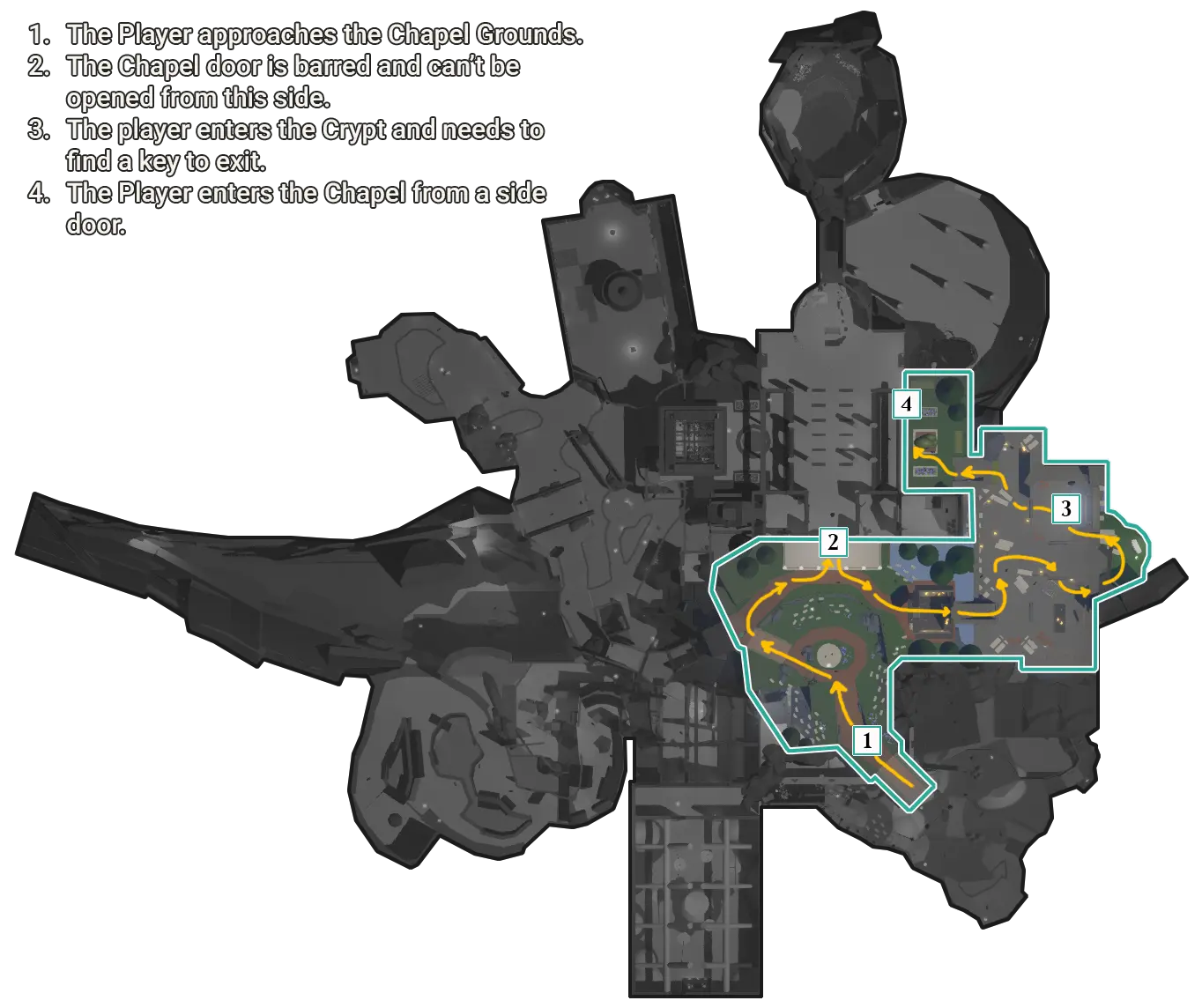
Beat 1: The Arrival
Summary: The player arrives and finds the chapel overrun with the undead. Their goal is to find a way inside and put a stop to the undead infestation. The main entrance is locked, so the only way forward is through an old crypt.
Design Notes: I wanted to let the player know that while doors may be locked in the chapel, there’s always an alternate path that will eventually come back to it. To do this, I have them approach the front entrance, then force them to go through a side entrance to actually unlock the main hall.
The Crypt was designed to introduce elements of the winding layout this level has. Weaving in and out of the structure is a slight callback to Silent Hill 2‘s apartments which use this to turn an ordinary building into a labyrinthe.
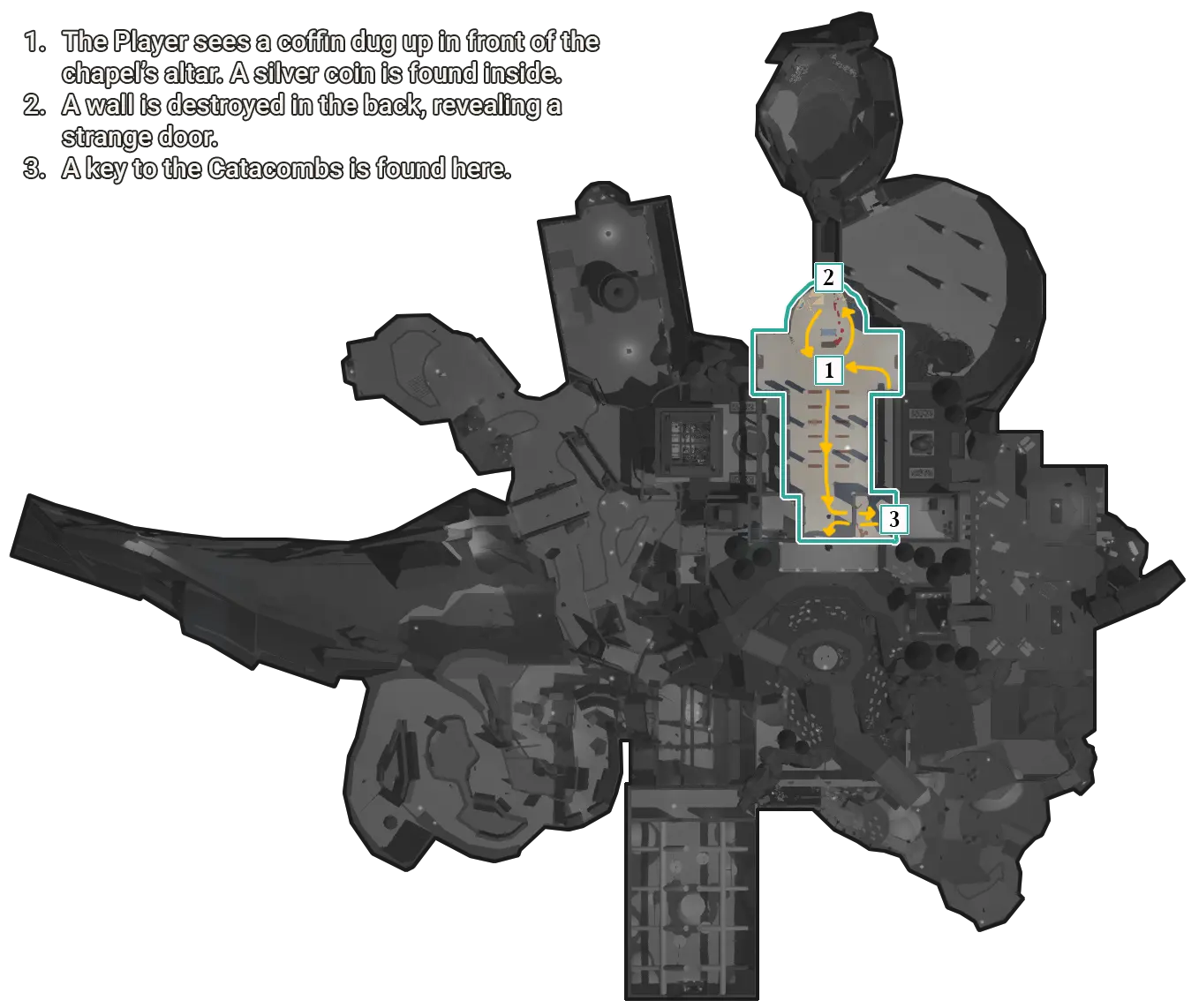
Beat 2: A Missing Corpse
Summary: After the player finds a way into the chapel, they come across an empty coffin that was dug up in front of the altar with a silver coin. A wall behind it was recently destroyed with a suspicious relief that says “Pay the toll, then grab hold of death to travel below.” As players progress through the level, they’ll learn that they must find a silver coin, a gold coin, and a scythe to unlock the door.
Design Notes: I wanted to reinforce to players that this area was special and they would be coming back frequently. As soon as they enter this area, they’re presented with the goal of unlocking this door to see what’s behind it!
Additionally, two of the doors are locked preventing the player from exploring more of the chapel. This is used to indicate that they’ll be coming back eventually and unlocking more of the chapel as they progress.
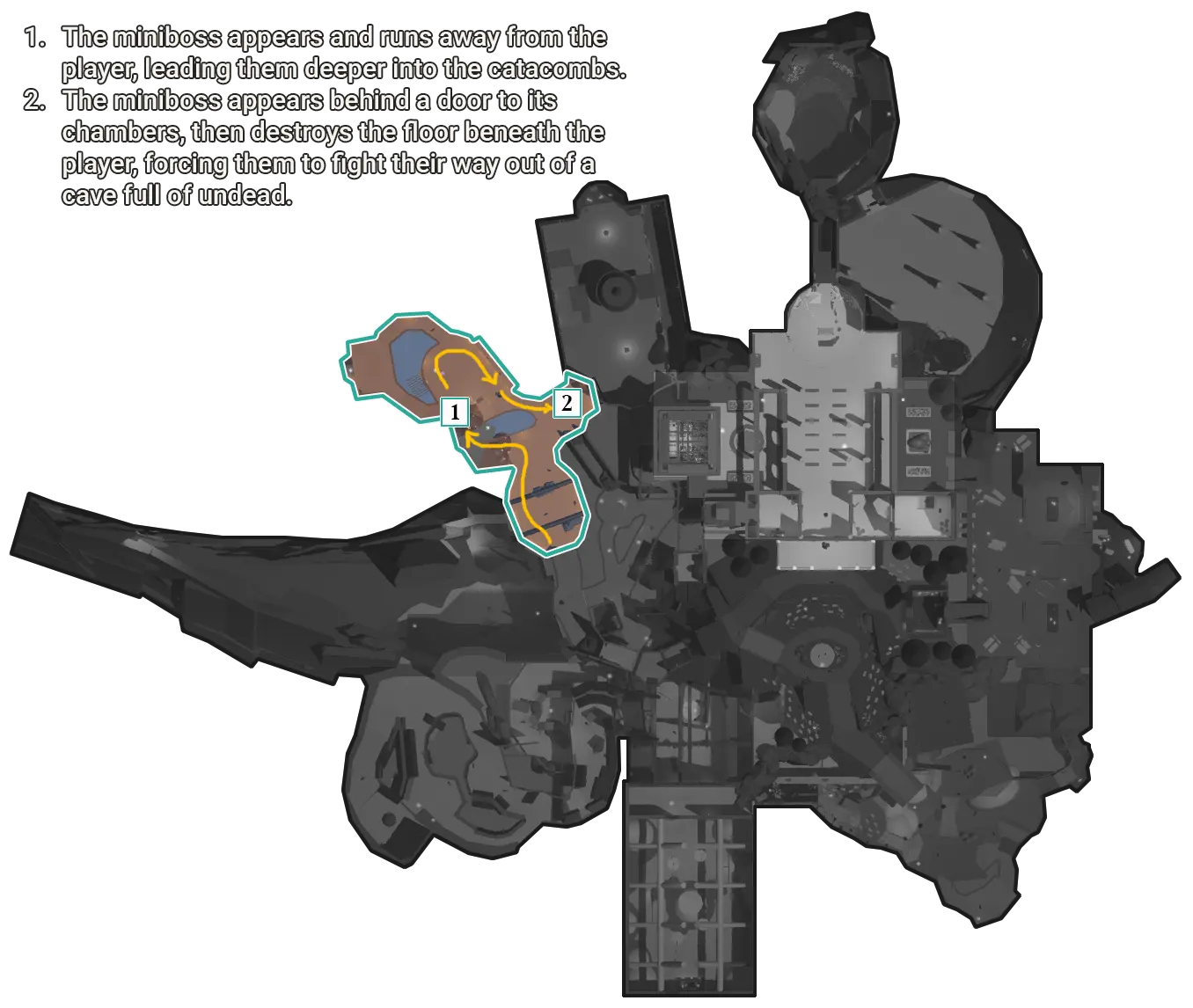
Beat 3: First Encounter with Court Mage Augus
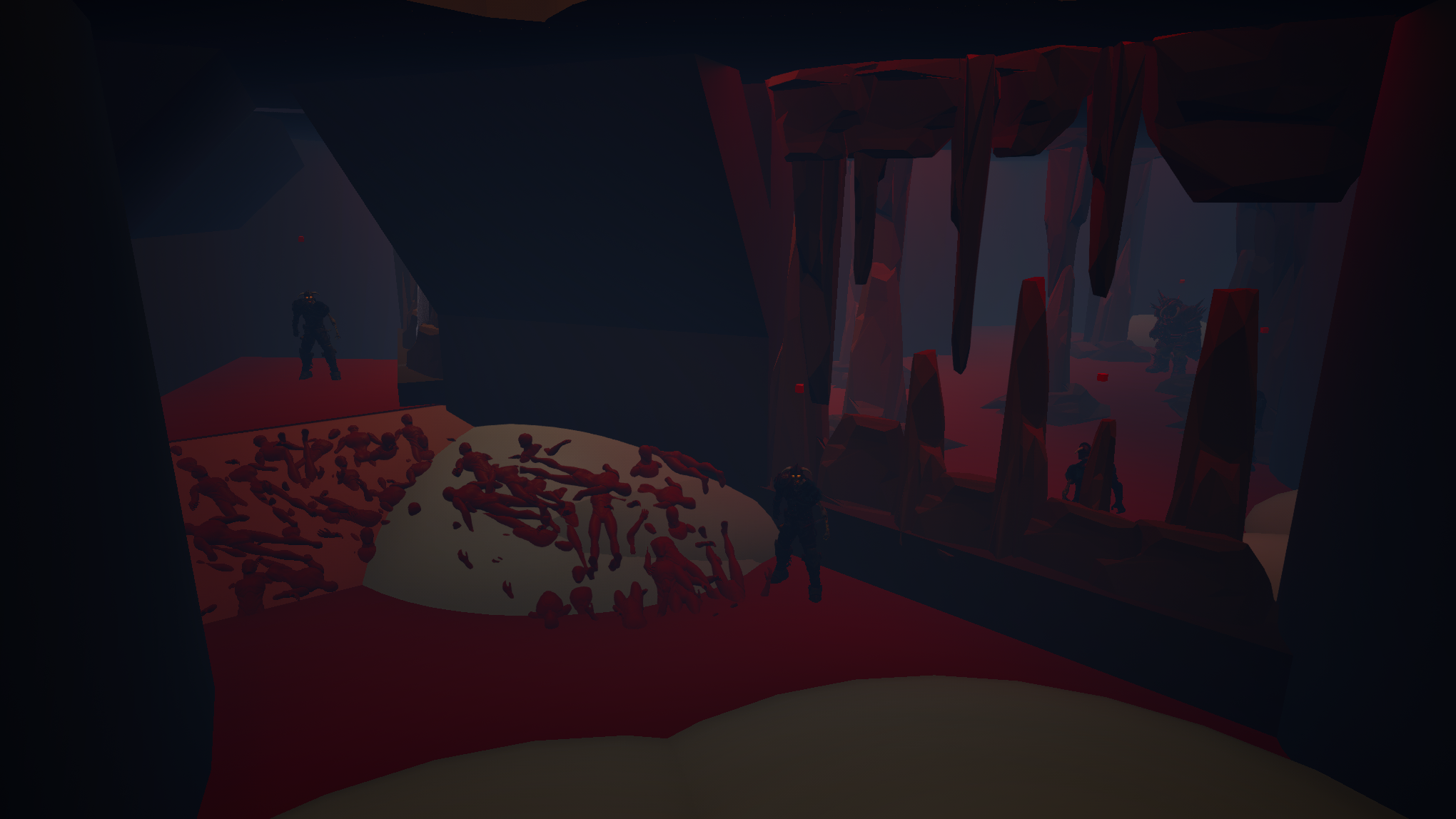
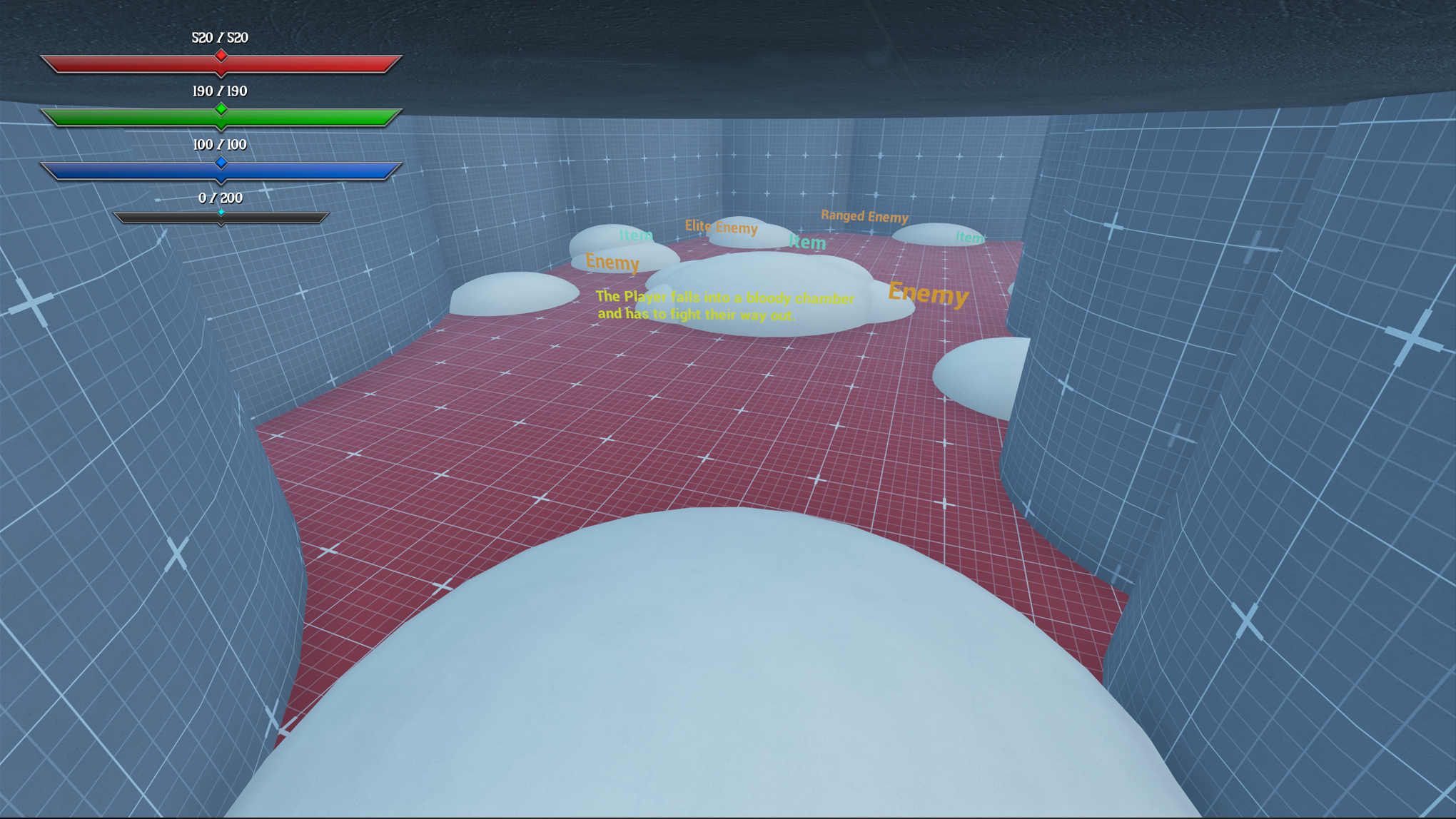
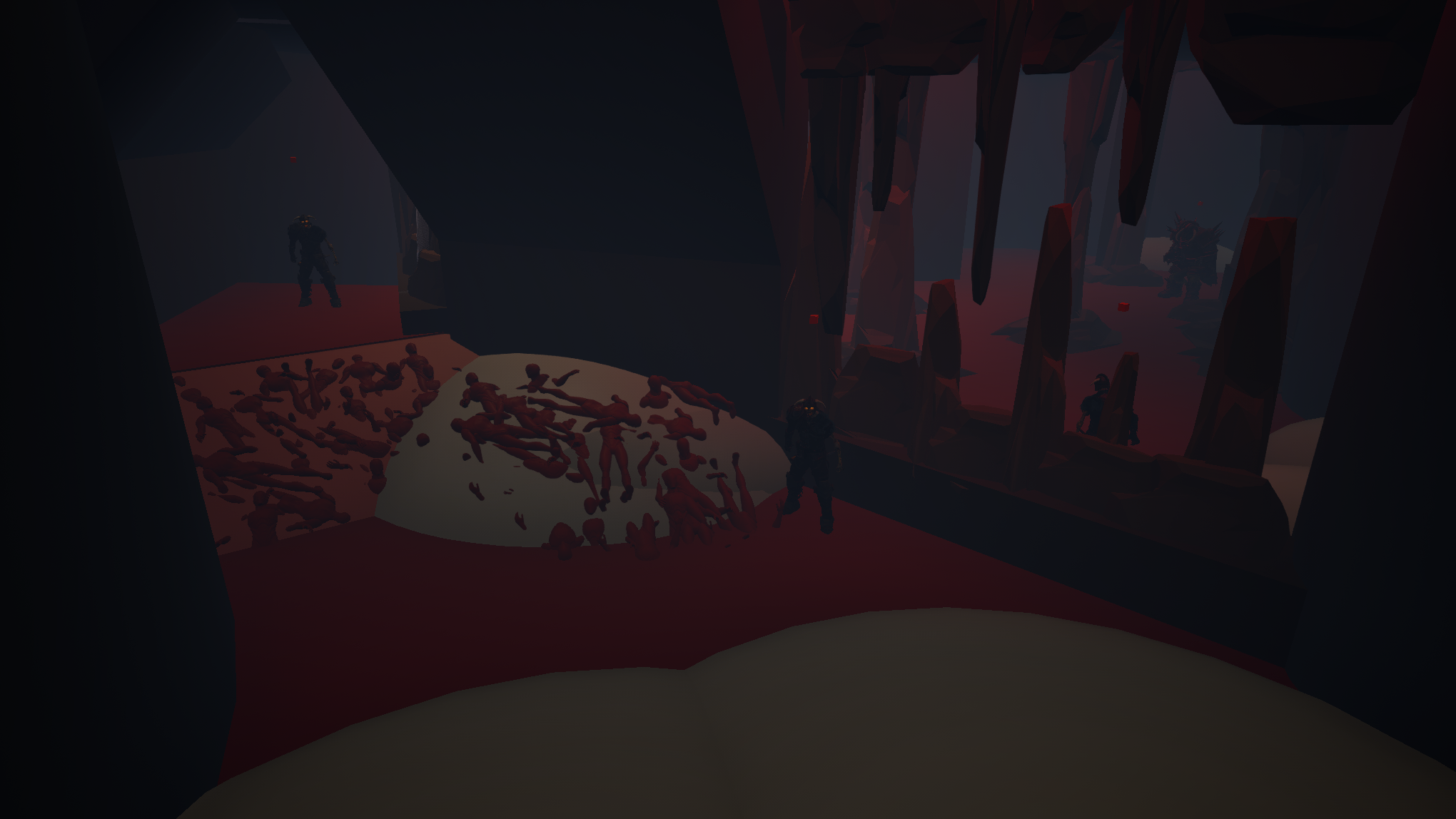
Summary: The player makes their way into the Catacombs and briefly sees the first miniboss, Court Mage Augus, before running off to the side. As the player pursues them, they fall into a cave below on top of a pile of bodies and other viscera. They need to fight their way through enemies and climb out of the cave.
Design Notes: I wanted this area to feel like a catacomb system, but not be too confusing to navigate. I added optional routes that provide a slight combat advantage and item rewards that add to the labyrinthe-like vibe, but always connect back to the golden path.
The section in the cave full of undead was originally just a combat arena. When I saw people playtest this section, they were surprised by the initial pitfall, but the horror didn’t linger. I added a funnel with a scripted event to draw out some more tension from the player and really make this area feel dreadful. See Iteration Highlight 1 below for more details.
Beat 4: First Miniboss
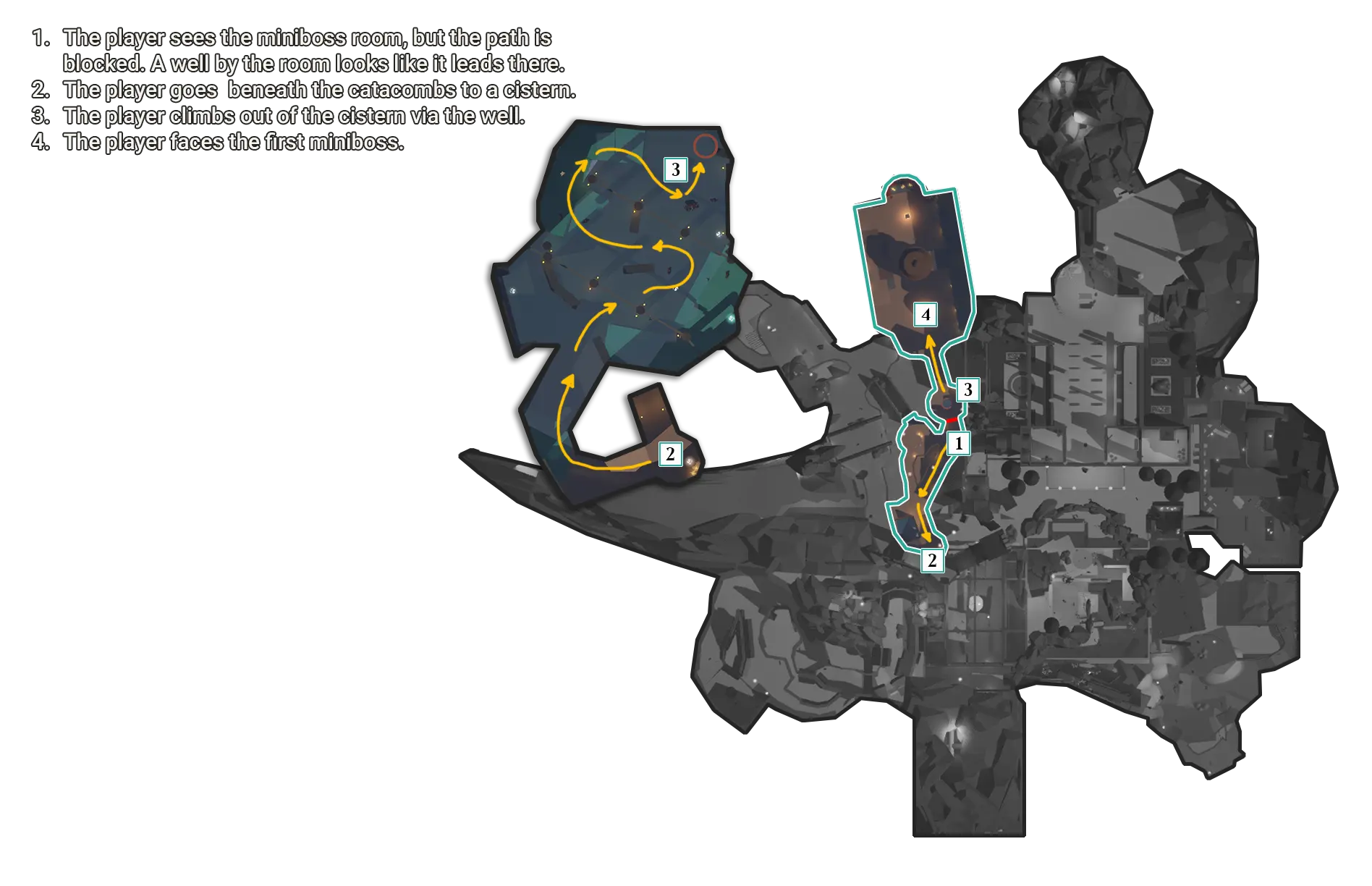
Summary: The player needs to fight their way through an aqueduct below the catacombs, climb out of a well, then face Court Mage Augus. This boss is a ranged boss that summons minions and fires slow moving projectiles. The player loots a coin from its body for the door behind the altar.
Design Notes: I wanted this section to feel like you’re weaving between levels of the catacomb to establish that there’s more beneath the surface. Contrasting the dry caves with a cistern helped break up the feeling of this section and provided visual variety.
The boss arena is designed around a ranged boss that summons extra minions throughout the fight. The arena is actually inspired by DOOM combat encounters because I wanted to give plenty of movement options to engage waves of enemies while dodging projectiles.
Beat 5: Return to the Chapel
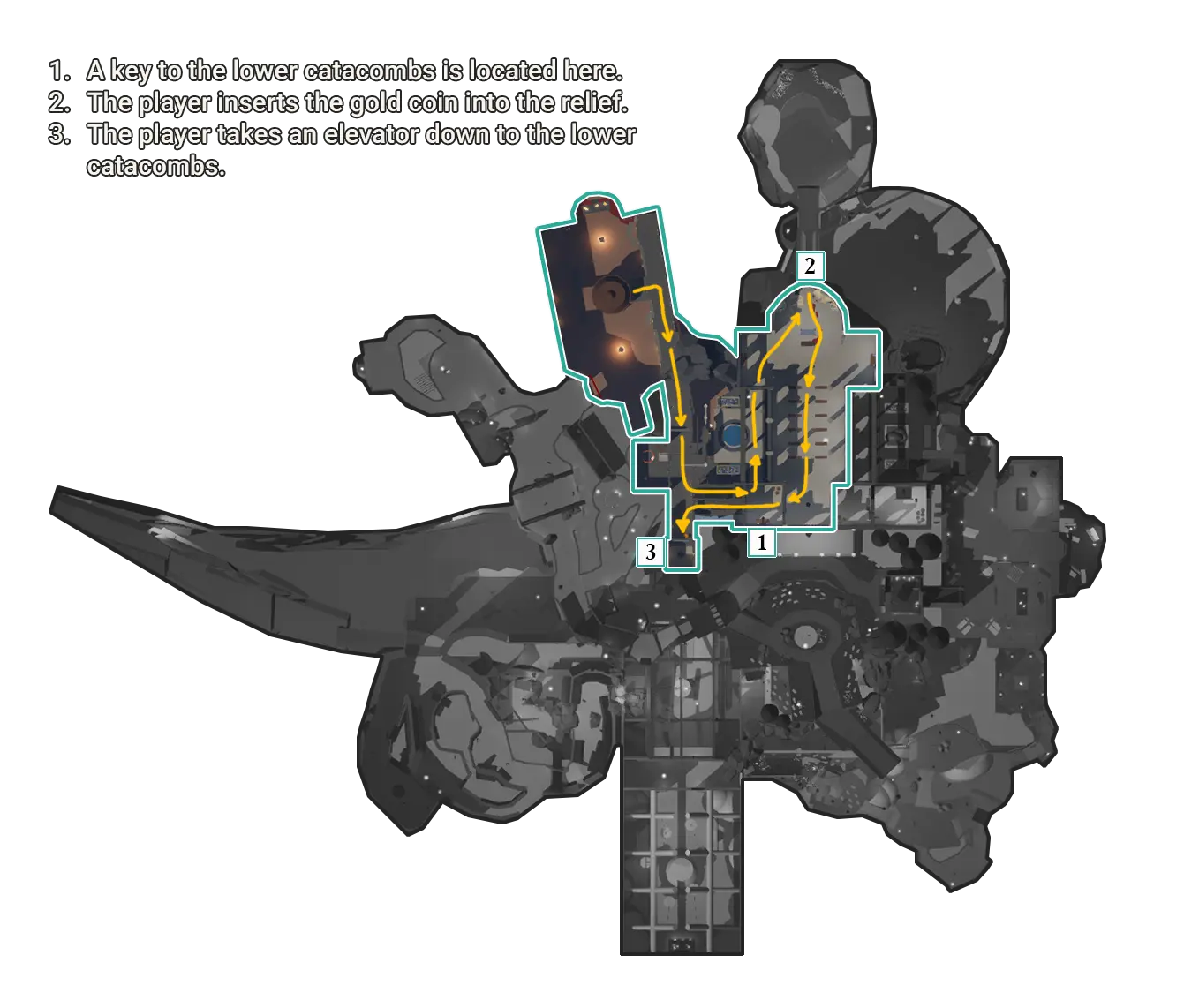
Summary: The player makes their way out of the upper catacombs back to the chapel through its wine cellar. They unlock a shortcut to the main hall and find a locked mausoleum. A key to the lower catacombs is on a table, giving them access to the elevator.
Design Notes: This is the first time you return back to the chapel and I wanted unlocking new areas of it to reinforce that the player is also progressing in the story. The natural lighting in the chapel area also acts as a reprieve from the dark catacomb system players just spent time in.
Beat 6: Lower Catacombs
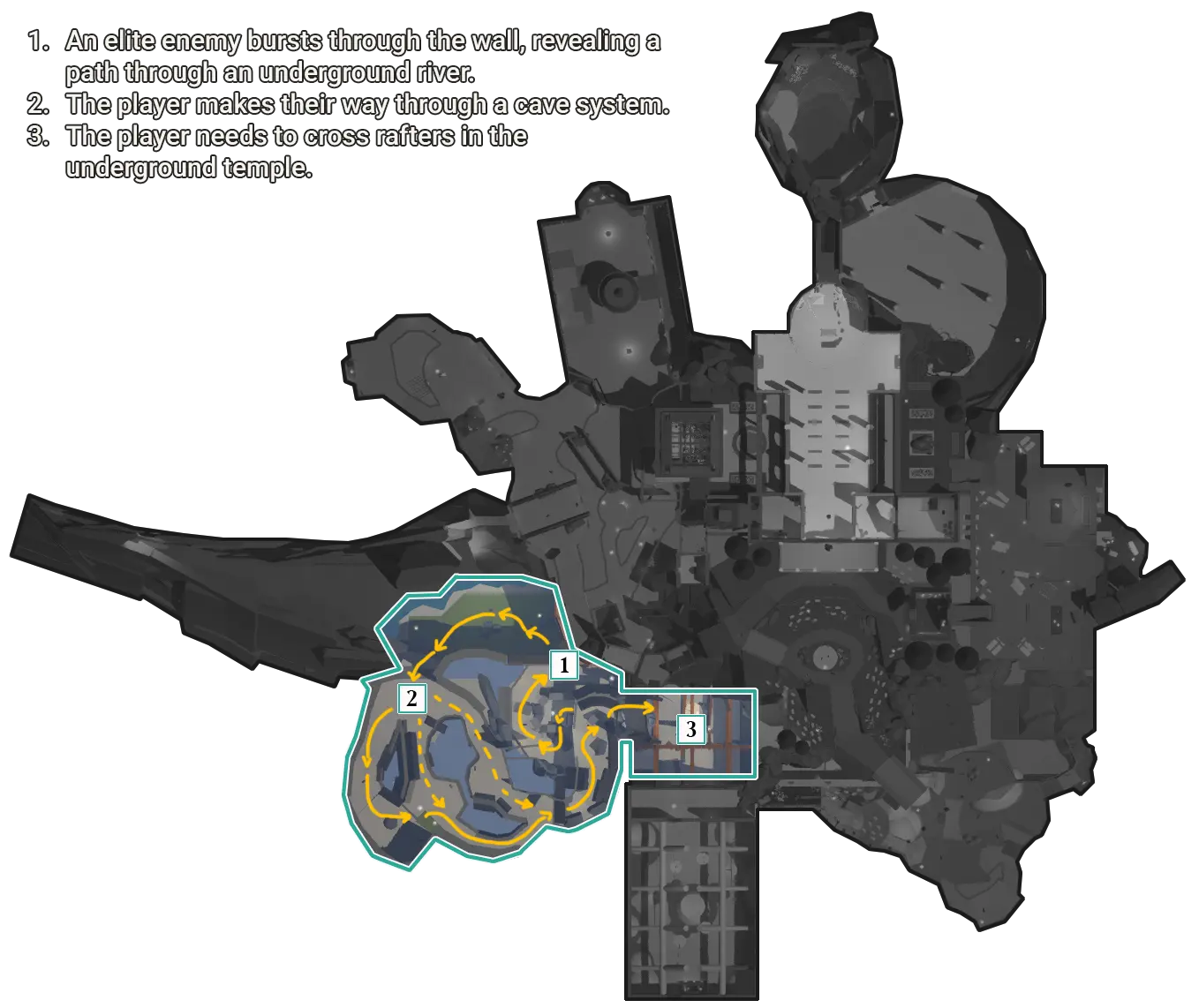
Summary: The player fights through the temple in the lower catacombs. An undead bursts through a wall and reveals a river path in a cave. They make their way through the cave system which connects to the second floor of the temple, where they need to cross old rafters.
Design Notes: This section acts as an intro to the lower catacombs as a whole. You have to maneuver in and out of this underground temple that feels like it’s crumbling as you progress. I thought this would be a nice way to sneak in some visual variety and fun set pieces to surprise the player.
Beat 7: Second Miniboss
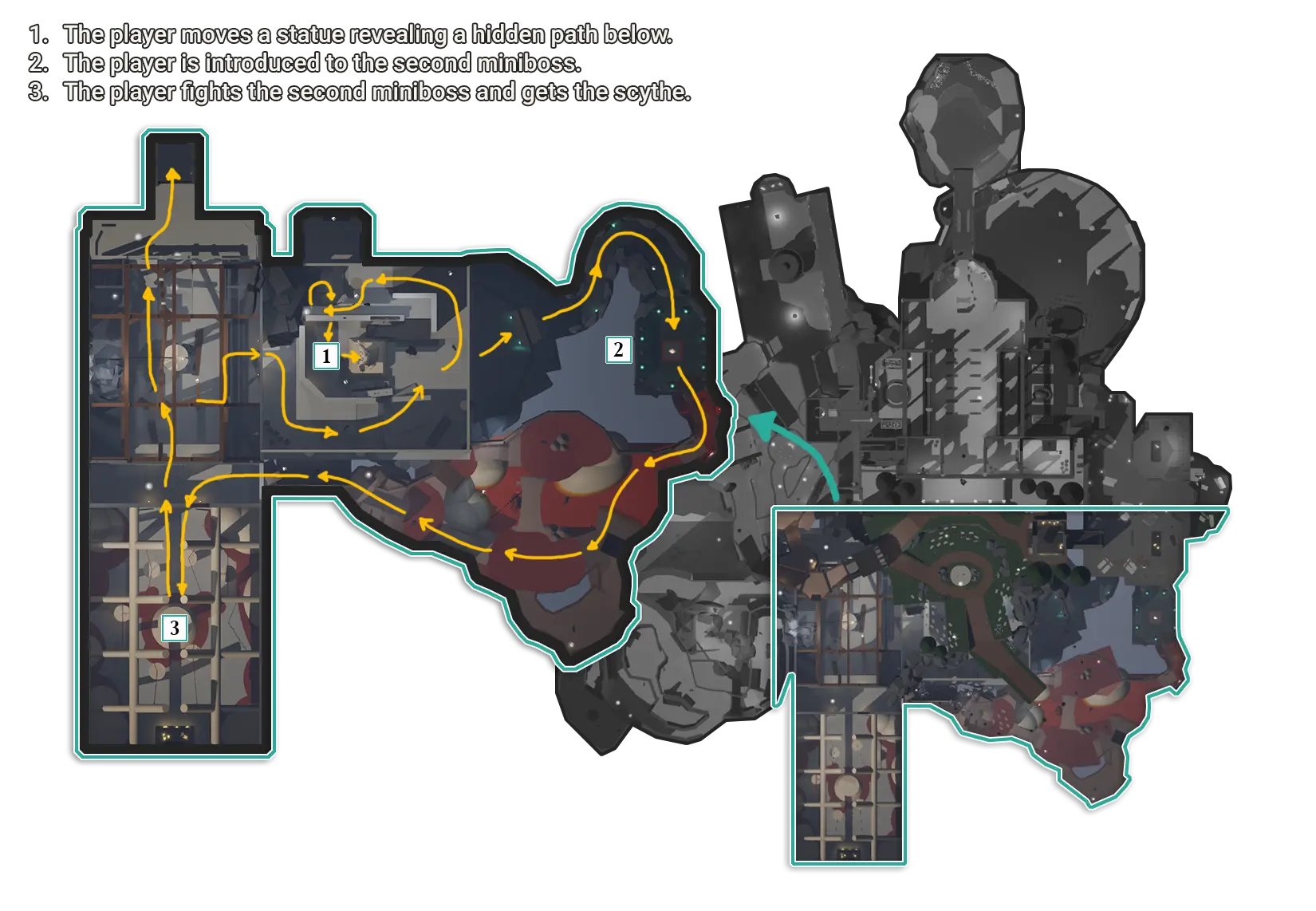
Summary: The player finds the tomb of the second miniboss, General Blackheart, and pulls a lever to enter it. There’s an item acting as a breadcrumb to have the player jump into the darkness, inspired by Silent Hill 2. They enter and have green lights guiding them. They arrive to a sacrificial chamber when suddenly General Blackheart bursts through the back wall and pulls an enemy through. They pursue General Blackheart and slay them getting the final door item, the scythe.
Design Notes: This section wasn’t in my original 2D Map! I added this whole area because I felt that the pacing in this area didn’t do enough to ramp up the intensity towards the second miniboss. This whole section has consistently been players’ favorite because of the scripted events and interesting combat challenges.
Beat 8: The End & the Final Boss
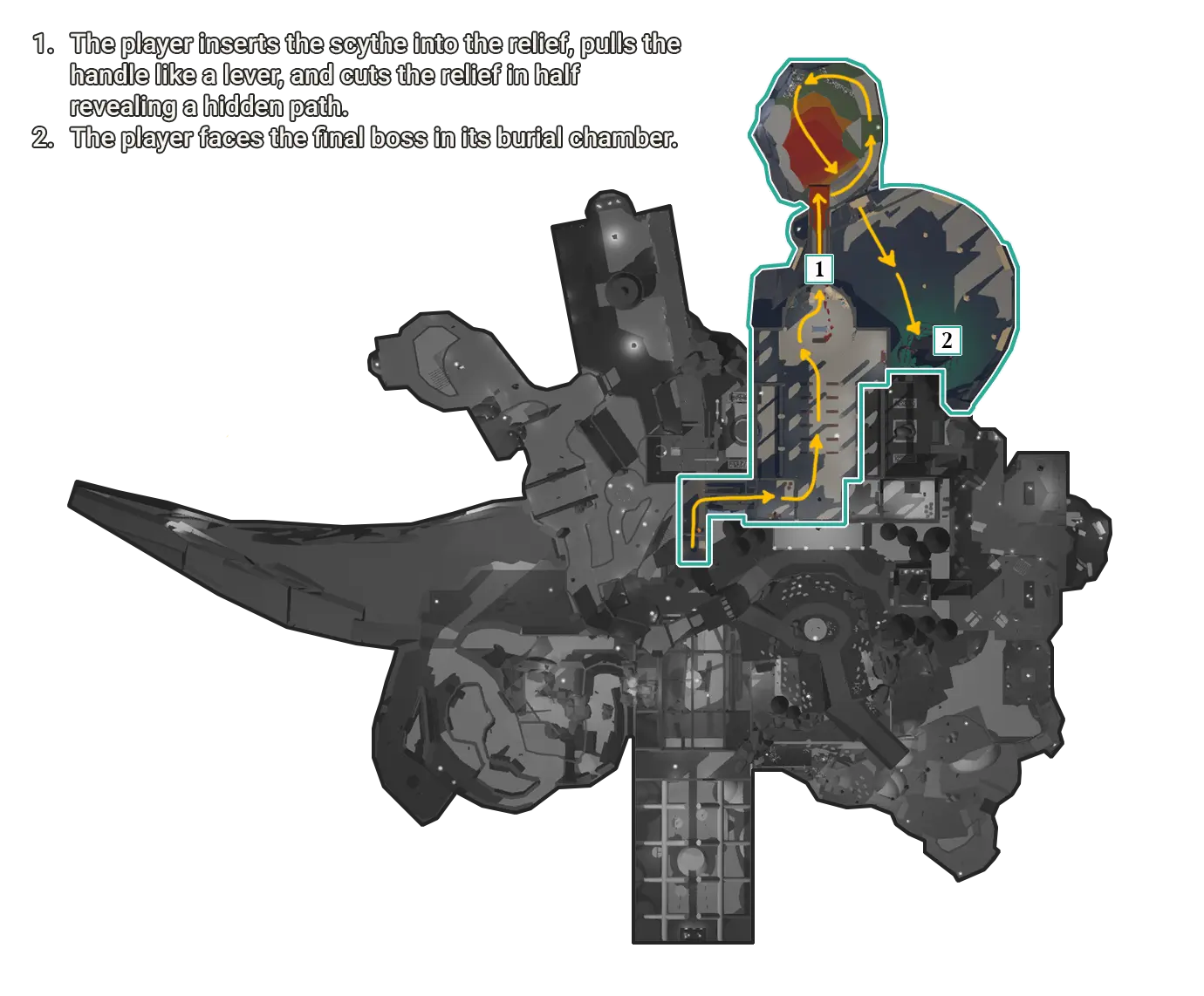
Summary: With the final item to open the door, the player makes their way back to the chapel. They insert the scythe into the stomach of the relief and slice it in half, revealing a blood waterfall and a path to a garden. They enter the final boss arena and fight them! A red ring is dropped.
Design Notes: I really wanted the effort of going through this level and finally unlocking the door to be memorable. With a proper cutscene, having the player rip through the door will look gnarly, but then subvert expectations by revealing one of the most serene areas in the level. The Final Boss arena also plays with elements of both life and death, with fireflies highlighting roots.
Beat 9: Epilogue
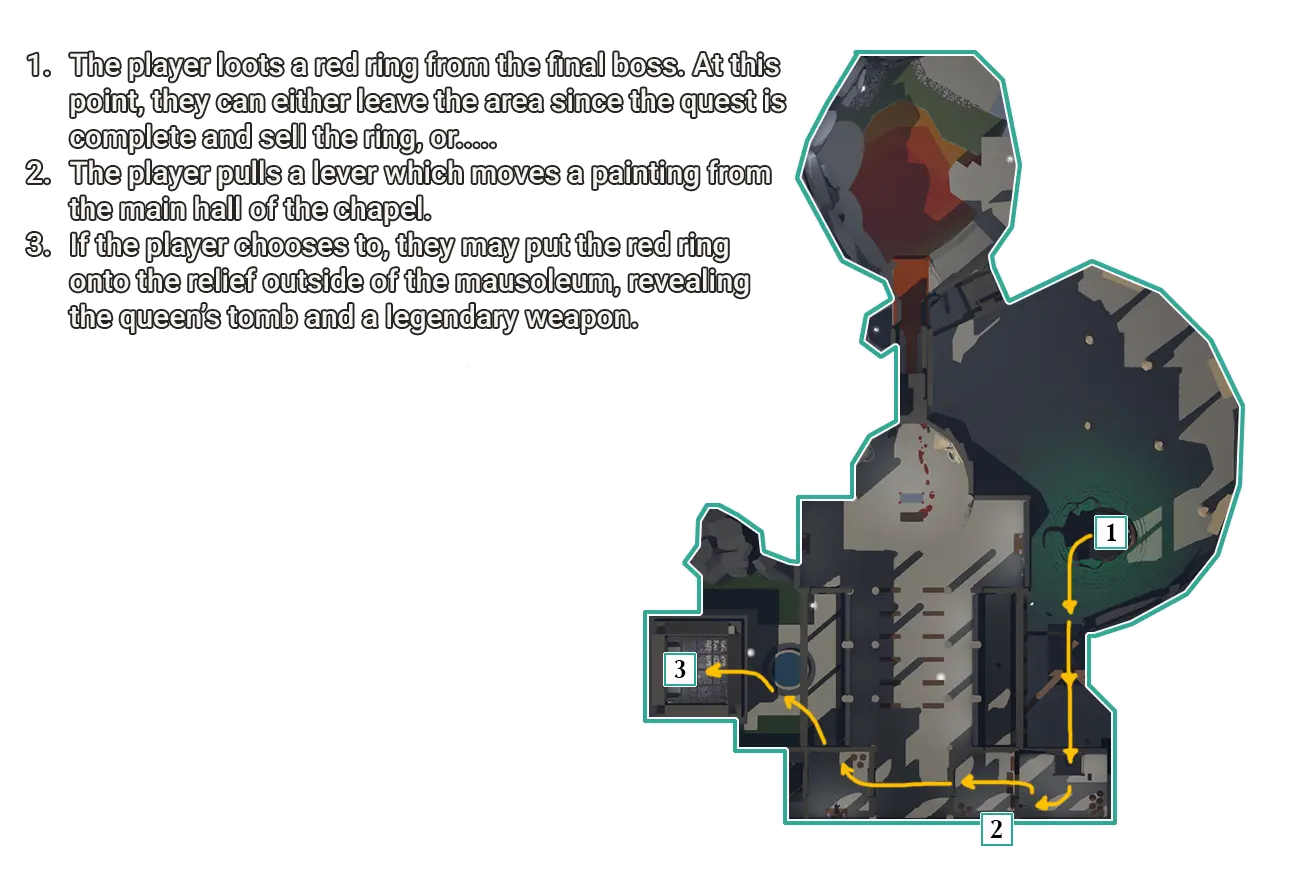
Summary: The player makes their way out of the boss arena and can complete the quest. I added an optional area to collect a legendary weapon and provide a little more lore. The red ring dropped by the last boss can be used to open the mausoleum and reveal the queen’s tomb.
Design Notes: I wanted the emotional impact of finding the legendary weapon to be a mix between beautiful and somber. Collecting a weapon from a boss is fun, but I think finding it in a more intimate setting gives it a more personal touch and room for an impactful narrative.


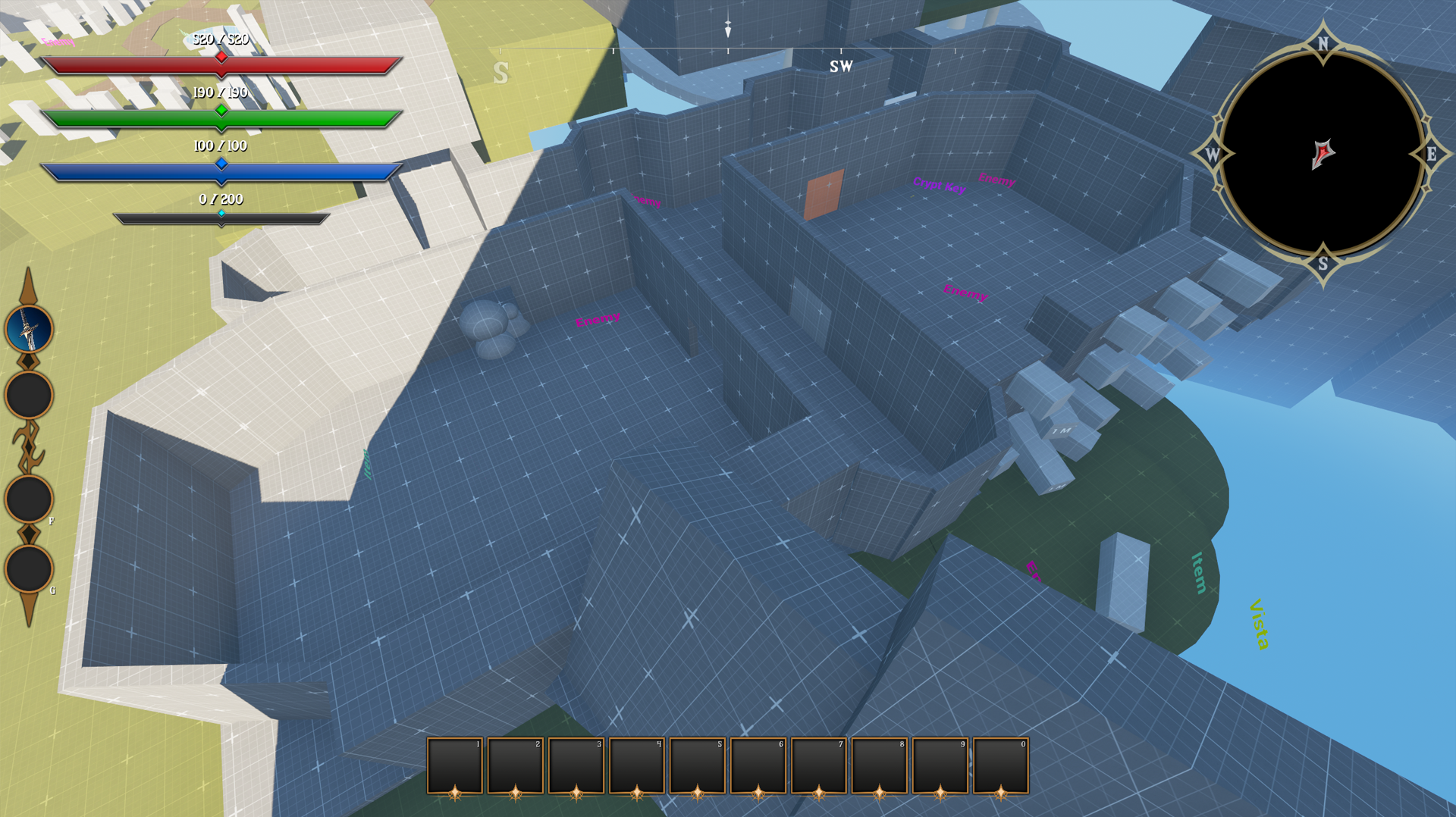
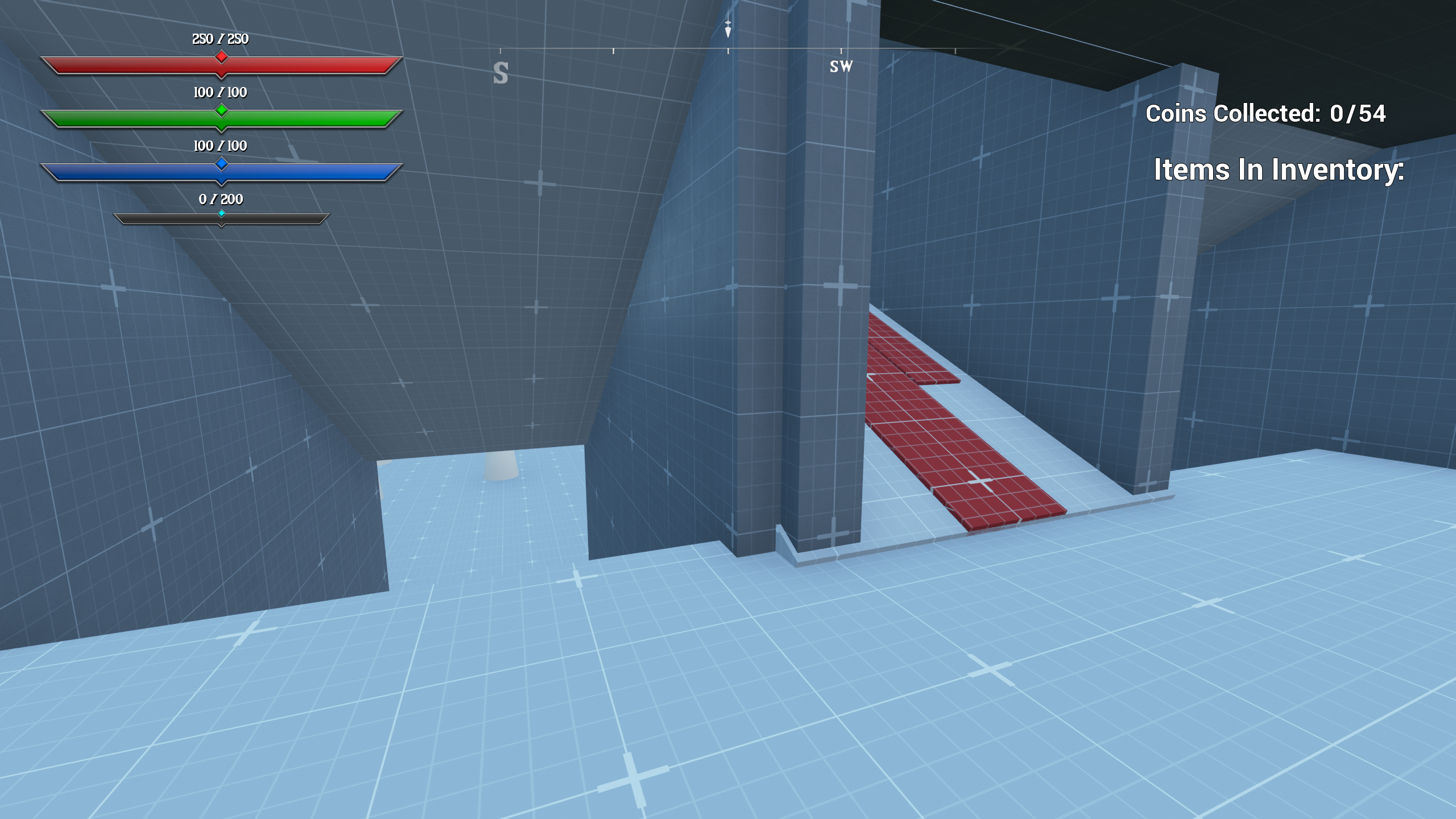
3. The First Roughout


4. Narrative Pass


5. Enemy Encounters Pass


6. Scripted Sequences Pass


7. Worldbuilding Pass


8: Key Improvements & Playtesting

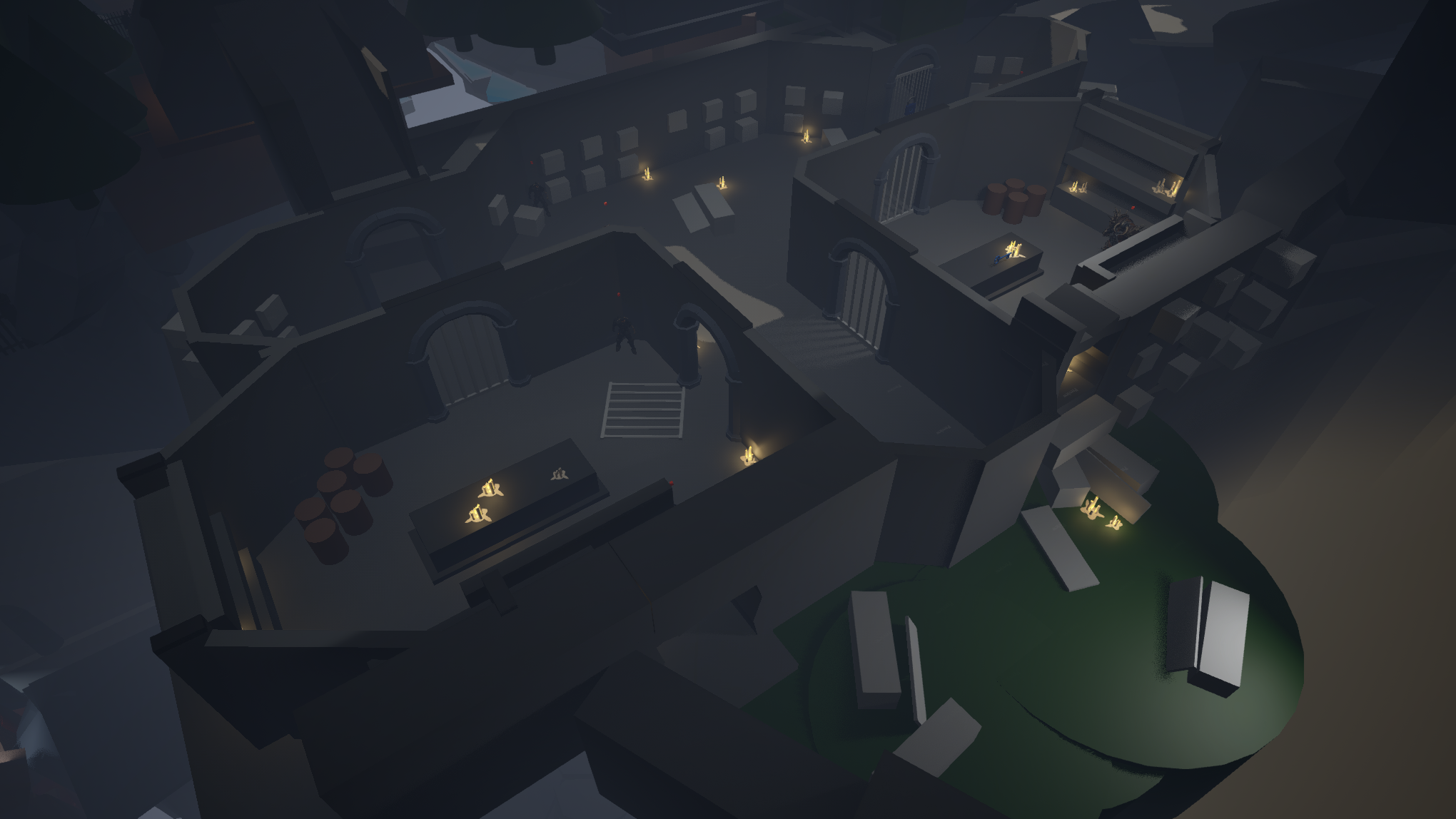
9. Polish Pass


